How PRP Therapy Works: Can It Help Delay Orthopedic Surgery?
Nobody wants to hear the word surgery. The moment a doctor says it, something shifts in the room. You nod along, but your brain is already somewhere else, thinking about recovery time, about who will manage things at home, about whether it is really that serious yet.
And then you walk out and start googling.
If that is where you are right now, you are not alone. A lot of people in that exact position have come across PRP therapy as something worth looking into. Maybe someone mentioned it. Maybe you read about a sportsperson recovering from a knee injury with it. Either way, you want to know if it is actually useful or just another thing that sounds promising on paper.
Fair enough. Let us talk through it honestly.
See How PRP Therapy Works (3D Animation Video on Instagram)
What Is PRP and Why Does It Involve Your Own Blood

PRP stands for Platelet-Rich Plasma. It sounds more complicated than it is.
Your blood has different parts to it. There are red cells, white cells, plasma, and platelets. Platelets are what your body rushes to a wound when you injure yourself. Their job is to start the healing process. They carry what are called growth factors, basically chemical signals that tell the surrounding tissue to repair and regenerate.
Now here is what PRP therapy does with that. A small amount of blood is drawn from your arm, the same as any routine blood test. That blood is placed in a machine called a centrifuge, which spins it rapidly until the different components separate from each other. What comes out is plasma with a much higher concentration of platelets than what normally flows through your body.
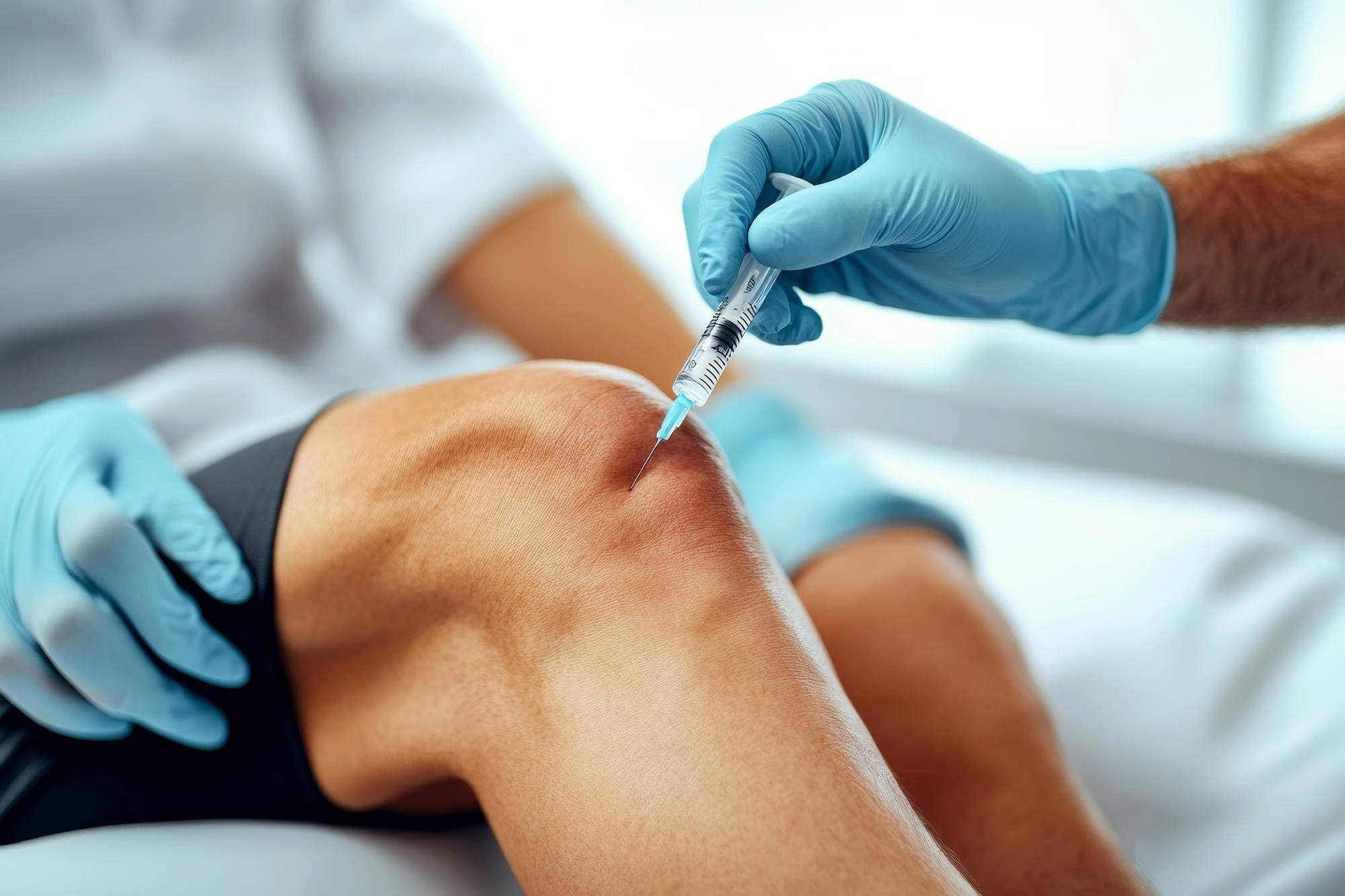
That concentrated solution is then injected directly into the injured area.
No foreign substance. No synthetic drug. Just your own blood, processed and delivered in a more targeted, more potent form, right to the spot that needs it.
What Conditions Is It Actually Used For

PRP is not a blanket solution for every joint or muscle problem. Doctors who use it regularly are usually quite specific about which cases they recommend it for, because it genuinely works better in some situations than others.
The conditions where it has shown real results include knee osteoarthritis, partial ligament and tendon tears, chronic tendon problems like tennis elbow or Achilles tendinopathy, and certain shoulder injuries. For people exploring ligament injury treatment options, PRP tends to come up as a serious option when the tear is partial and the tissue still has enough integrity to respond to healing signals. A completely torn ligament is a different story, and most specialists will tell you that clearly.
The injection itself is done under ultrasound guidance in most cases, so there is no guesswork about placement. The whole appointment from blood draw to injection rarely goes beyond an hour. You go home the same day.
Can It Actually Help You Avoid Surgery, or at Least Delay It
This is the question that matters most to people, so here is an honest answer.
For some people, yes, it genuinely can.
There are patients who came in with knee degeneration that was heading toward replacement surgery, started a course of PRP combined with physiotherapy, and found themselves two or three years down the line still managing well without an operation. That is not a small thing. Those are years of normal life, without a major surgical recovery sitting in the middle of them.
But PRP is not magic. It does not reverse severe cartilage loss. It does not put a completely torn ligament back together. What it can do, when used at the right stage, is reduce inflammation, support tissue repair, and improve how a joint actually feels and moves day to day.
This is what doctors mean when they say conservative treatments may help delay surgery. Conservative care, things like physiotherapy, injections, weight management, activity adjustments, is usually where treatment should begin. Surgery is not the first answer. It is the answer you reach when the other options have been genuinely tried and are no longer enough. PRP belongs in that earlier phase, and when it is the right fit for the right patient, it can hold that phase open for a good while longer.
What the Procedure Feels Like Day to Day
Most people are surprised by how undramatic the process is.
You sit down, blood is drawn, and while the centrifuge does its work you just wait. The injection follows, usually within the hour. Afterward, some soreness around the site for a day or two is normal. That is actually a sign that the healing response is being activated, not a sign that something went wrong.
Results do not show up immediately. The growth factors take weeks to do their work, and most people start noticing a real difference somewhere around the four to six week mark. A second injection a few months later is sometimes recommended depending on how the body responds.
It is not a single appointment and you are done. It is a process, and it works best when it is part of a broader treatment plan that includes physiotherapy and lifestyle adjustments alongside it.
Who Should Actually Consider This

Here is something that does not get said clearly enough. PRP works best when there is still something for the body to work with.
If a joint has deteriorated severely, or a ligament has torn completely through, the growth factors do not have enough healthy tissue around them to make a meaningful difference. The best candidates are people who are in the early to moderate stages of a condition, where the damage is real but recovery is still biologically possible.
That assessment requires someone who knows what they are looking at. A sports injury specialist in Chennai who regularly handles both athletic injuries and age-related joint problems will look at your scans, understand the full picture, and give you an opinion that is actually grounded in your specific situation. Not a general answer. Not what worked for someone else. What makes sense for you.
That kind of clarity is genuinely hard to find by reading online, and it matters more than most people realise when you are trying to make a decision this significant.
The Honest Way to Look at This
Surgery, when it is truly needed, should not be avoided. Putting it off when it is the right answer only makes things harder later.
But going into surgery before other options have been properly explored is also not the right move. Recovery is long. Life gets put on hold. And sometimes people go through all of that when a more conservative approach might have bought them several good years first.
PRP sits in that middle space. It is not for everyone and it will not fix everything. But for the right person at the right stage of a condition, it can genuinely shift the conversation and give you more time and more options before anything more drastic is considered.
A Note From Hope Ortho Clinic
Dr. Jebaraj Pradeep has worked with patients who came in convinced that surgery was their only way forward, and many of them left with a very different plan. That is not because surgery was taken off the table entirely. It is because the right evaluation showed there was still a window to try something less invasive first.
At Hope Ortho Clinic, PRP therapy is not offered as a quick fix or a way to sell you on avoiding surgery forever. It is offered when it genuinely makes clinical sense for where you are in your condition. Dr. Jebaraj Pradeep takes the time to go through your scans, understand what your day-to-day looks like, and give you a straight answer about what your options actually are.