

Best Knee Replacement Surgeon in Chennai for Pain-Free Mobility
Advanced Knee Replacement | Faster Recovery | Long-Term ReliefPrecision-led surgical expertise, evidence-based outcomes, and a dedicated commitment to restoring lasting mobility and patient independence.
Book an Appointment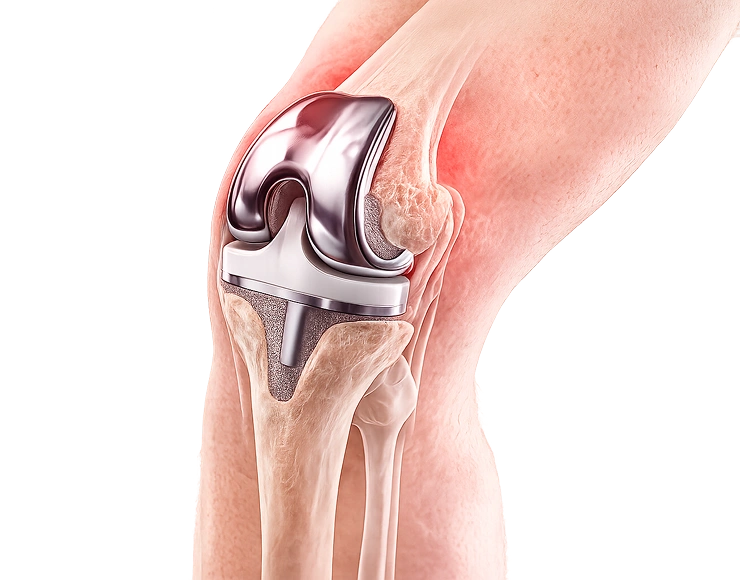

When to Consider Knee Replacement?
Knee replacement surgery is a definitive orthopaedic intervention for individuals whose joint deterioration has rendered non-surgical management inadequate. Progressive arthritis, advanced cartilage erosion, and structural joint degeneration impose severe limitations on daily function and independence. Consulting a skilled knee replacement surgeon in Chennai at the right stage is critical, delayed intervention compounds degeneration and complicates recovery. As a leading joint replacement surgeon, Dr. Jebaraj offers precise clinical assessment to determine when surgical restoration delivers the most durable, life-changing outcomes for knee pain treatment.
Surgical intervention may be indicated for:
Severe knee pain disrupting daily activities and rest
Persistent difficulty walking or climbing stairs
Limited or diminishing relief from medications or therapy
Advanced arthritis or progressive joint degeneration
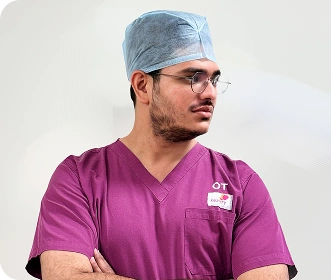
Dr. Jebaraj: Chennai’s Best Knee Replacement Surgeon
Dr. Jebaraj Pradeep — MBBS, MS (Ortho), FASM, is a distinguished joint replacement and arthroscopy surgeon at Hope Ortho Clinic, Chennai. Trained at Sri Ramachandra Medical Centre, he is among the select orthopedic surgeons in Chennai to offer both advanced joint replacement and arthroscopic procedures under one specialist framework, delivering hundreds of patients measurable, lasting relief.
Expertise in Joint Replacement Surgery
Extensive surgical experience in primary and complex joint replacement, with a consistent record of clinically favourable outcomes across a broad and diverse patient population.
Advanced Surgical Techniques
Proficient in contemporary minimally invasive approaches that reduce tissue disruption, optimise implant alignment, and support superior long-term biomechanical function.
Personalised Treatment Plans
Every patient receives a rigorously individualised care pathway from pre-operative evaluation through surgical intervention to structured rehabilitation, calibrated to unique anatomy and functional goals.
High Success Rate & Long-Term Outcomes
A consistent track record of high procedural success, with implant durability and functional restoration that reflect both surgical precision and evidence-based post-operative management.
Focus on Faster Recovery & Rehabilitation
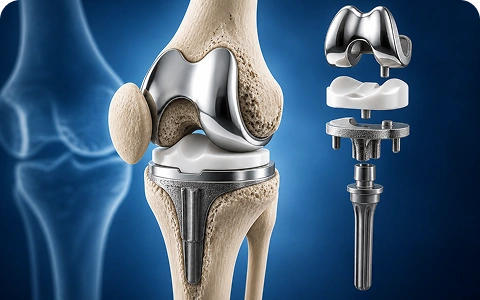
Knee replacement surgery involves precise removal of damaged articular surfaces and implantation of advanced prosthetic components that faithfully replicate the knee's natural biomechanics — restoring stable, pain-free joint function.
Procedure Overview
Knee replacement surgery involves precise removal of damaged articular surfaces and implantation of advanced prosthetic components that faithfully replicate the knee's natural biomechanics — restoring stable, pain-free joint function.
Types of Knee Replacement
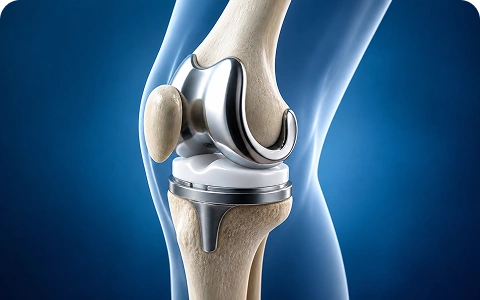
Total Knee Replacement
Complete resurfacing of all three knee compartments using precision-engineered implants; the definitive solution for advanced, diffuse arthritic degeneration and irreversible joint damage.
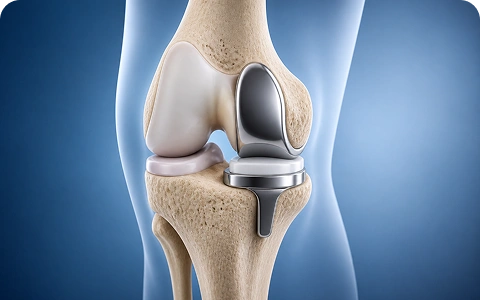
Partial Knee Replacement
Targeted replacement of the damaged compartment only; preserves healthy bone and tissue, enables quicker rehabilitation, and is ideal when degeneration remains anatomically confined.
Revision Knee Replacement
Specialised corrective surgery to replace a failed or worn primary implant; demands advanced surgical expertise and meticulous pre-operative planning to restore stability and function.
Recovery & Outcomes
Post-operative recovery is structured around early mobilisation, typically initiated within 24 hours, followed by a supervised physiotherapy after knee surgery protocol to rebuild strength and joint stability. Most patients resume daily activities within 6–12 weeks. Recovery after knee replacement progresses to full functional independence over 3–6 months, delivering measurably improved mobility, sustained pain relief, and enhanced quality of life.
Early Mobilisation | Physiotherapy & Strengthening | Return to Daily Activities | Improved Mobility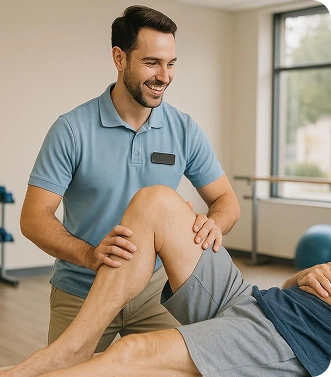

Daycare Knee Replacement
Our minimally invasive techniques and modern pain management protocols often allow you to return to the comfort of your own home on the very same day as your surgery.

Specialized Rehabilitation
Start your journey toward mobility within hours. Our knee-specific rehab program focuses on immediately restoring your range of motion and rebuilding muscle strength for a faster return to daily life.

Continuous & Personalized Support
From the hospital to your home, our team provides 24/7 guidance and clear recovery milestones. For your peace of mind, your doctor will be available at all times throughout your recovery to address any doubts or concerns immediately.

Premium Care at Affordable Pricing
Experience world-class, advanced orthopedic treatments and top-notch facilities at a fraction of the cost charged by large corporate hospitals, ensuring quality care is accessible to everyone.

Medically Reviewed and Verified by
Dr. Jebbaraj Pradeep, MBBS, MS (Ortho), FASM
Consultant Orthopaedic Surgeon
FAQ’S
Recovery after knee replacement typically spans 6–12 weeks for a return to routine activities, with complete functional recovery achieved between 3 to 6 months. Structured physiotherapy, early mobilisation, and adherence to a personalised rehabilitation protocol play a decisive role in accelerating outcomes
Patients progressively resume walking, swimming, cycling, and low-impact activities as pain-free mobility improves. High-impact sports are generally discouraged to preserve implant longevity. Improved joint function enables most patients to climb stairs, travel, and re-engage with daily life with significantly enhanced confidence and independence.
Modern knee implants are engineered for exceptional durability, with most high-grade prostheses delivering reliable function for 15 to 20 years or more. Advances in implant materials and surgical precision have substantially improved long-term outcomes, making contemporary knee replacement a dependable, enduring solution for joint degeneration.